Science First. Innovation Always.
Welcome to The Next Frontier resource hub!
Whether you're developing a space exploration game, building an AI-powered scientific tool, analyzing satellite data, or exploring a new business idea, these resources can help you get started.
You don't need to use every tool listed here. Choose the resources that support your project and experience level.
🔬 1. Find Your Scientific QuestionGreat innovation begins with curiosity.
What problems are scientists trying to solve? What challenges will future space explorers face? How can discoveries from space research improve life on Earth?
Start With the Decadal SurveysThe National Academies of Sciences, Engineering, and Medicine publishes Decadal Surveys that identify major scientific questions and research priorities. These reports help inform NASA's scientific planning and offer excellent inspiration for hackathon projects.
🪐 Planetary Science & Astrobiology
Explore planetary formation, ocean worlds, astrobiology, and the search for life beyond Earth.
🌍 Earth Science
Explore climate change, coastal environments, natural disasters, ecosystems, and Earth observation.
🔭 Astronomy & Astrophysics
Explore galaxies, black holes, exoplanets, cosmic evolution, and the origins of the universe.
🧬 Biological & Physical Sciences
Explore astronaut health, biological systems in microgravity, space agriculture, and long-duration human exploration.
💡 2. Turn Research Into a ProjectNot sure where to begin? Try this approach:
-
Identify a problem. Choose a scientific, environmental, or technological challenge that interests you.
-
Research the science. Discover what researchers already know and which questions remain unanswered.
-
Find an opportunity. Consider how software, AI, engineering, data analysis, or design could help.
-
Build a solution. Create an application, prototype, visualization, game, simulation, or research concept.
-
Share your findings. Explain your approach, demonstrate your work, and describe what you learned.
Remember: Your project doesn't need to solve an entire scientific problem. A thoughtful prototype can be a meaningful first step.
🛰️ 3. NASA Open Data & Scientific ResourcesExplore real scientific information to support your research and development.
| Resource | What You Can Explore |
|---|---|
| NASA Earthdata | Climate, oceans, land, ecosystems, and satellite observations |
| NASA Open Data | Public datasets covering NASA research, missions, and technology |
| NASA Planetary Data System | Data from planetary missions and solar system exploration |
| NASA Exoplanet Archive | Exoplanet discoveries and astronomical data |
| NASA APIs | NASA imagery and data for applications |
| NASA Worldview | Interactive satellite imagery and environmental observations |
| NOAA Digital Coast | Coastal data, mapping tools, and resilience resources |
| USGS EarthExplorer | Satellite imagery and geospatial data |
Use these platforms to explore research, analyze data, experiment with AI, and develop scientific tools.
| Tool | Best For |
|---|---|
| Google Colab | Python programming, data analysis, and machine learning |
| Kaggle | Public datasets, notebooks, and ML examples |
| Hugging Face | AI models, datasets, and machine learning applications |
| Google AI Studio | Generative AI experimentation and prototyping |
| NotebookLM | Organizing and exploring research documents |
| ChatGPT | Brainstorming, programming assistance, and concept development |
Scientific integrity matters: Verify AI-generated information against reliable sources and disclose meaningful AI assistance in your project.
💻 5. Development, Design & PrototypingYou don't need to be an experienced developer to create something meaningful.
| Tool | Best For |
|---|---|
| GitHub | Code hosting, collaboration, and documentation |
| Replit | Browser-based coding and prototyping |
| Streamlit | Python applications and scientific dashboards |
| Vercel | Deploying websites and web applications |
| Figma | Interface design and interactive prototypes |
| Canva | Presentations, graphics, and visual storytelling |
Want to showcase your project on social media or prepare presentation graphics?
Access Our Shared Canva Resource
🎮 6. Game Development & Interactive ExperiencesGames, simulations, and interactive storytelling are welcome!
| Tool | Best For |
|---|---|
| Godot | Open-source 2D and 3D game development |
| Unity | Games, simulations, and interactive applications |
| Unreal Engine | Immersive 3D environments and simulations |
| Scratch | Beginner-friendly games and interactive stories |
| Three.js | Interactive 3D experiences on the web |
Need an idea? Explore these scientific and technological challenges.
🌊 Coastal Resilience in Hampton RoadsThe Challenge: How can satellite data help coastal communities understand flooding, sea-level rise, and environmental risks?
Project ideas: Flood visualization tools, sea-level rise maps, coastal monitoring dashboards, and environmental education games.
Explore: NASA Earthdata | NOAA Digital Coast
🌱 Earth Data for BusinessesThe Challenge: How can scientific data help businesses make better decisions?
Project ideas: Agricultural monitoring tools, weather-informed logistics, environmental risk dashboards, and sustainable business analytics.
Explore: NASA Applied Sciences | NASA Technology Transfer
🧬 Supporting Human Life in SpaceThe Challenge: How can technology help astronauts stay healthy and productive during long-duration missions?
Project ideas: Astronaut health monitoring concepts, space agriculture simulations, habitat management systems, and AI-assisted mission planning.
Explore: NASA Human Research Program
🌕 Designing Future Space HabitatsThe Challenge: How can future lunar and Martian habitats manage resources sustainably?
Project ideas: Lunar habitat concepts, Mars resource simulations, energy optimization tools, and space agriculture applications.
Explore: NASA Artemis
🪐 Exploring Other WorldsThe Challenge: How can we make planetary science more accessible and interactive?
Project ideas: Planetary maps, Mars exploration games, asteroid visualizations, and educational solar system simulations.
Explore: NASA Planetary Data System
🎨 Making Science More AccessibleThe Challenge: How can technology, art, and storytelling help more people engage with science?
Project ideas: Interactive scientific stories, accessible astronomy applications, educational games, and AI-powered science learning tools.
Explore: NASA Science
🚀 8. Event Resources & Community SupportThe Next Frontier Website
Access event information, preparation materials, and the Hackathon Starter Kit, including pitch resources.
Devpost
Find event announcements and participation information.
📤 The Next Frontier on Devpost
Community Support
Connect with fellow participants through The Next Frontier Discord community during the event. Access details will be shared through official event communications.
🌌 Your Next Great Idea Starts HereScience provides the questions. Technology provides the tools. Creativity helps us imagine what's possible.
Start with curiosity. Explore the science. Build something meaningful.
Think Locally. Innovate Globally. 🚀



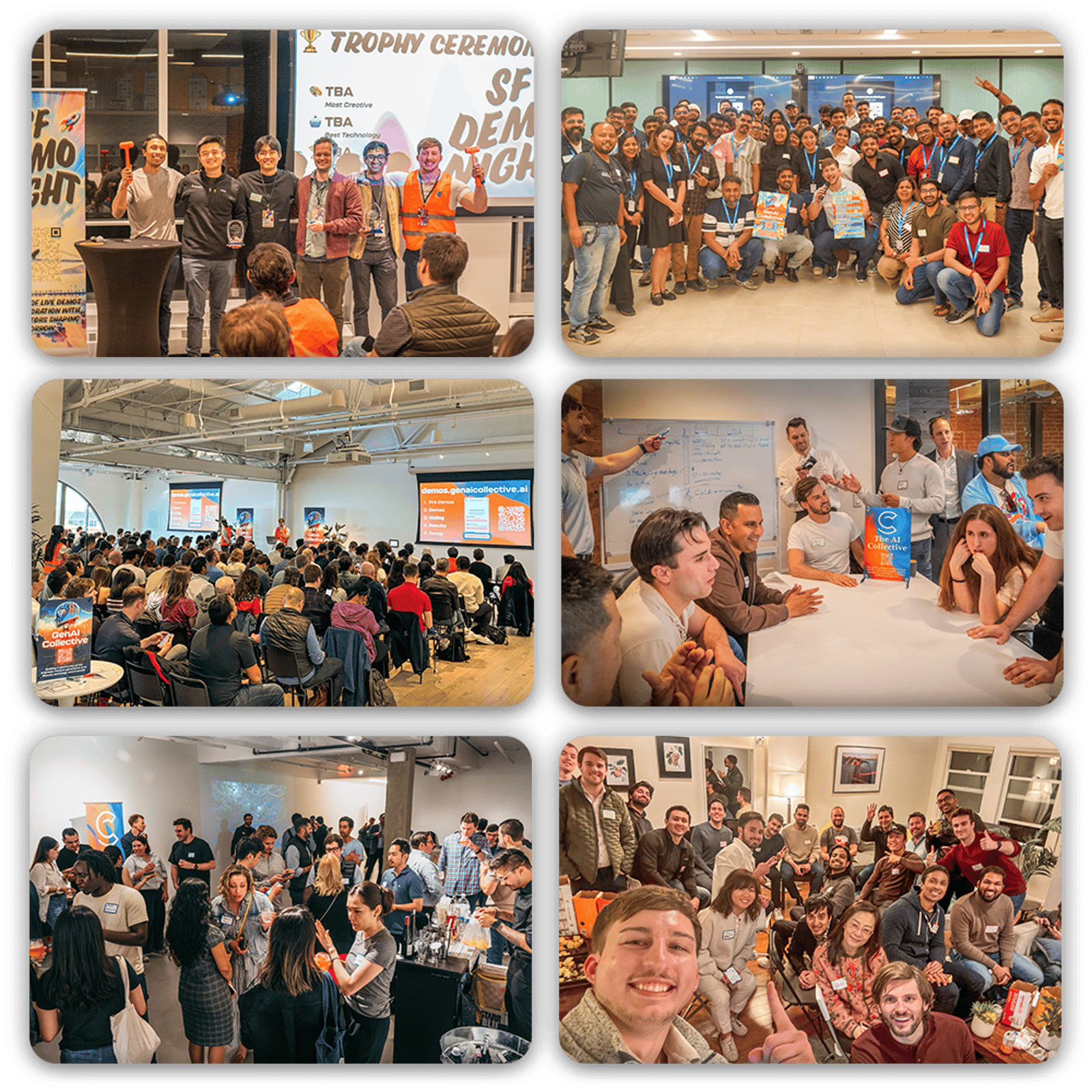
The AI Collective is a global non-profit community uniting 150,000+ pioneers – founders, researchers, operators, and investors – exploring the frontier of AI in major tech hubs worldwide. Through events, workshops, and community-led research, we empower the AI ecosystem to collaboratively steer AI’s future toward trust, openness, and human flourishing.
All attendees and organizers at events affiliated with The AI Collective agree to our privacy policy and are subject to our code of conduct. Additionally, by registering for this event, you agree to The AI Collective Hampton Roads chapter photo & video policy.